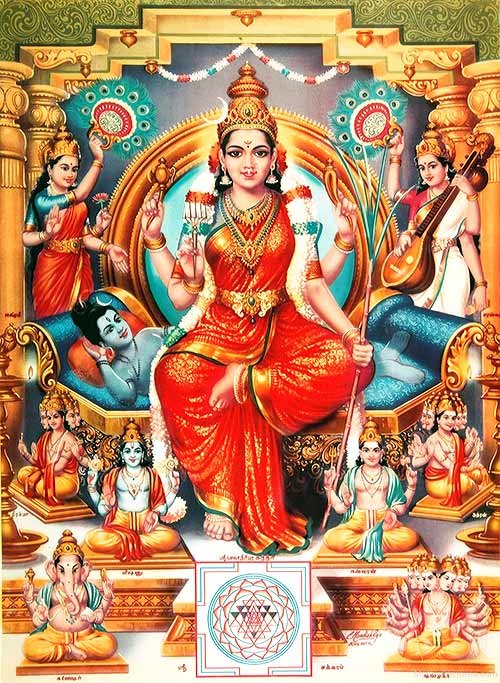
Imagine a spiritual tradition stretching back over 4,000 years, born in the ancient Indus Valley, where the divine isn't confined to a single story or a lone prophet. This is Hinduism, known to its adherents as "Sanatana Dharma"—the eternal path. It's a vibrant tapestry woven with countless deities, each embodying unique aspects of the cosmos, human experience, and ultimate reality. Far from being a rigid dogma, it's a living tradition that deeply roots itself in the daily lives of 80% of India's population and millions worldwide.
When we speak of "Dioses Hindúes" or Hindu Gods, we're not just discussing mythical figures; we're exploring profound philosophical concepts brought to life through rich narratives and symbols. While the pantheon is vast—estimated to include anywhere from 330,000 to 330 million deities—the reverence and focus often vary by region and individual doctrine, creating a deeply personal and diverse spiritual landscape.
At a Glance: Key Takeaways on Hindu Deities
- Vast Pantheon: Hinduism boasts a massive array of gods and goddesses, reflecting diverse aspects of the divine.
- The Trimurti: Brahma (Creator), Vishnu (Preserver), and Shiva (Destroyer/Renewer) form the central trinity governing cosmic cycles.
- Brahman vs. Brahma: Brahman is the ultimate, impersonal reality of the universe; Brahma is a specific creator deity.
- Avatars: Vishnu frequently incarnates (as avatars like Krishna and Rama) to restore balance and righteousness (dharma).
- Divine Feminine (Shakti): Goddesses like Lakshmi, Saraswati, Durga, and Kali are powerful manifestations of the supreme feminine energy.
- Personal Devotion: Worship often focuses on one or more chosen deities, with deep personal connection.
- Integral to Life: These deities are not distant figures but are actively revered and invoked in daily rituals, festivals, and life events.
The Eternal Path: An Introduction to Sanatana Dharma
Hinduism is more than a religion; it's a way of life, an intricate philosophical system that encompasses a broad spectrum of beliefs, rituals, and practices. Unlike many Abrahamic faiths, it has no single founder, no single holy book, and no centralized ecclesiastical authority. Instead, it's a confluence of traditions that have evolved over millennia, united by core principles like karma, dharma, reincarnation, and the pursuit of moksha (liberation).
Within this framework, deities serve as accessible representations of the ultimate, formless Divine. They act as bridges between the human and the transcendent, offering a path for devotion and understanding complex spiritual truths. Whether it's through the benevolent gaze of Vishnu, the fierce protection of Durga, or the wisdom bestowed by Ganesha, each deity helps adherents connect with different facets of the divine power that permeates all existence.
Beyond Gods: Unveiling the Concept of Brahman
Before diving into the specific deities, it's crucial to understand a foundational concept: Brahman. This isn't a god in the traditional sense, but rather the eternal, ultimate reality and essence of existence itself. It is the supreme being from which all other gods and elements of the universe emanate. Think of Brahman as the boundless ocean, and the individual deities as waves, each distinct but fundamentally part of the same vast sea.
Brahman is the universal spirit, the unmanifest source, pure consciousness, and bliss. It is the underlying truth of everything, transcending all descriptions and distinctions. While often difficult for the human mind to grasp, its energy manifests through the various deities, including the central Trimurti, allowing for worship and contemplation in more concrete forms. This distinction is vital: don't confuse Brahman (the ultimate reality) with Brahma (the creator deity).
The Sacred Trinity: Unpacking the Trimurti
At the pinnacle of the divine hierarchy stands the Trimurti, a powerful trinity of primordial deities responsible for the cosmic cycle of creation, preservation, and destruction. These three gods represent the dynamic forces that govern the universe, working in concert to maintain balance and facilitate continuous renewal.
Brahma: The Architect of Worlds
As the first manifestation of the Trimurti, Brahma is the creator of the universe and all its beings. He is often depicted with four faces, symbolizing the four Vedas (ancient sacred texts), and four arms. His skin typically appears yellowish or reddish, and he sports a white beard, signifying profound wisdom. Brahma resides in Satyaloka, the highest heaven.
He is the husband of Saraswati, the goddess of knowledge, and Savitri. Interestingly, despite his crucial role as the creator, Brahma is not widely worshipped directly; only a handful of temples are dedicated to him, unlike Vishnu or Shiva. This is often explained by the belief that his work of creation is complete, while Vishnu and Shiva are actively engaged in the ongoing cycles of preservation and destruction. Brahma travels on a swan named Hamsa, symbolizing discernment and grace.
Vishnu: The Cosmic Preserver
The second manifestation of the Trimurti, Vishnu, is the great protector and preserver of the cosmos. He is tasked with maintaining universal order (dharma) and sustaining all life. For Vaishnavas (followers of Vishnu), he is the principal god. He is commonly portrayed as a handsome young man with blue skin, holding four items in his hands: a mace (strength), a chakra disk (power/destruction of evil), a conch shell (the cosmic sound), and a lotus flower (purity/creation).
Vishnu is famous for his avatars—divine descents he takes to Earth whenever dharma declines and evil rises. The most celebrated of these are Krishna and Rama, part of a traditional count of ten primary avatars. He is the consort of Lakshmi, the goddess of prosperity. Other names for Vishnu include Narayana, Jagannath, and Vasudeva. His role is to continuously intervene in the cosmic drama to restore balance and righteousness, offering hope and protection to humanity.
Shiva: The Transformer and Destroyer
Completing the Trimurti is Shiva, the god of destruction and renewal. His role is not merely annihilation but also transformation, clearing the way for new cycles of time and creation. For Shaivites (followers of Shiva), he is the supreme god. Shiva is often depicted with grayish-blue skin, four arms, a crescent moon on his head, a serpent as a necklace, a trident in one hand, and a small drum (damaru) in the other, symbolizing creation and destruction. His third eye represents wisdom and insight beyond ordinary perception.
Shiva's wife is Parvati, who brings balance to his often ascetic and wild nature (before Parvati, he was married to Sati). Together, they are the parents of Ganesha and Kartikeya. Shiva's mythical residence is Mount Kailash, a sacred peak in the Himalayas. He embodies paradoxes: he is both a fierce ascetic and a loving householder, a wild dancer and a serene meditator. His destructive power is always ultimately creative, paving the way for cosmic rebirth. To dive deeper into the vastness of the divine, you might want to explore the world of gods and see how different traditions interpret these foundational concepts.
The Pantheon Expands: Key Deities Beyond the Trinity
While the Trimurti forms the core, the Hindu pantheon is rich with countless other deities, each with unique attributes, stories, and sacred functions. These figures often represent specific aspects of divine energy, offering guidance and blessings in various facets of life.
Krishna: The Enchanter and Divine Avatar
One of the most popular and widely venerated gods, Krishna is considered the most perfect avatar of Vishnu. He descends to Earth to restore dharma and vanquish evil. Krishna is the central figure of the Bhagavad Gita, a foundational scripture that contains profound philosophical teachings, and a hero of the epic Mahabharata.
He is typically portrayed as a handsome young man with blue skin, playing a flute, captivating all with his divine charm. For followers of Krishnaism and the Hare Krishna movement, he is not merely an avatar but the Supreme Godhead himself. His stories are filled with playful antics, heroic deeds, and deep spiritual wisdom, making him a beloved figure across India and the world.
Ganesha (Ganapati): The Remover of Obstacles
Ganesha, also known as Ganapati, is one of the most beloved and instantly recognizable Hindu deities. He is the son of Shiva and Parvati and is invoked at the beginning of any new venture to remove obstacles, bestow good fortune, and grant abundance. He is also the patron of students, arts, and sciences.
Distinctly characterized by his elephant head on a human body, Ganesha often has a warm smile and is frequently depicted holding sweets. Legend says he lost one of his tusks while using it as a pen to transcribe the Mahabharata, showcasing his dedication to knowledge. His gentle nature, wisdom, and ability to clear paths make him universally adored.
Saraswati: The Muse of Wisdom and Arts
Saraswati is the goddess of knowledge, arts, learning, and music. She is particularly revered by artists, musicians, and students seeking enlightenment and creativity. As the wife of Brahma, the creator, she personifies the flow of wisdom that enables creation. She is also associated with a mythical sacred river, symbolizing the flowing nature of knowledge.
Saraswati is typically depicted holding a musical instrument, often a sitar or veena, and riding upon a white goose or swan, which symbolizes her ability to discern between good and evil. She is part of the "Tridevi" or feminine trinity of Hinduism, alongside Lakshmi and Durga, representing the benevolent powers of the divine feminine.
Lakshmi: The Goddess of Prosperity
Lakshmi is the radiant goddess of prosperity, wealth, well-being, beauty, and fortune. She is the divine consort of Vishnu, and wherever he incarnates as an avatar, she reappears by his side, such as Rukmini with Krishna or Sita with Rama. She is one of the most widely worshipped deities, especially during Diwali, the festival of lights, where devotees seek her blessings for material and spiritual wealth.
Often depicted seated on a lotus flower, Lakshmi grants both tangible riches and inner contentment. She is highly significant for merchants and even revered by Jainists. Her presence signifies abundance, grace, and auspiciousness, while her nemesis, Alakshmi, represents misfortune and poverty.
Parvati: The Embodiment of Devotion and Shakti
Parvati is a benevolent goddess who personifies love, devotion, and motherhood. She is the faithful wife of Shiva and the mother of Ganesha and Kartikeya. Parvati is one of the many manifestations of Shakti, the primordial cosmic energy and the dynamic force that moves through the entire universe. She represents the nurturing and powerful aspects of the divine feminine.
While often depicted in her gentle, motherly form, Parvati can also take on formidable aspects like Durga (the warrior goddess) and Kali (the fierce destroyer of evil), demonstrating the full spectrum of Shakti's power. She resides with Shiva on Mount Kailash, bringing balance and grace to his ascetic nature.
Rama: The Ideal King and Dharma Incarnate
Rama is the hero of the epic poem Ramayana and is revered as the seventh avatar of Vishnu. He embodies the perfect king, an ideal son, brother, and husband, a strict follower of dharma (righteous conduct). His story revolves around his unwavering commitment to duty, even in the face of extreme hardship.
Rama's most famous tale recounts his valiant struggle against the demon king Ravana to rescue his beloved wife, Sita, a quest in which he was aided by the loyal monkey god Hanuman. He is typically depicted holding a bow and arrow, symbolizing his prowess as a warrior and protector of justice.
Devi (Shakti): The All-Encompassing Divine Feminine
The term Devi (or Shakti) represents all female deities, signifying the feminine manifestation of the supreme God. She is the dynamic, creative, and sustaining power of the universe. Devi encompasses goddesses like Lakshmi, Saraswati, and Durga, each embodying different aspects of her vast power—creation, preservation, and destruction.
Referred to as "The Mother" (Amman), Devi is worshipped in countless forms and incarnations throughout India. She is the divine energy that activates the cosmos and the inherent power behind the male deities. Her worship highlights the reverence for feminine strength, fertility, and cosmic power within Hinduism.
Hanuman: The Epitome of Loyalty and Strength
Hanuman is a revered god depicted with the face of a monkey and a powerful, furry body. He is the quintessential companion of Rama in the Ramayana, embodying unparalleled courage, unwavering commitment, generosity, and determination. His devotion to Rama is legendary, serving as an example of ultimate loyalty and selflessness.
Hanuman is widely worshipped across all sects of Hinduism, invoked for strength, perseverance, and protection. His stories celebrate his incredible feats, including leaping across oceans and carrying mountains, all in service of dharma and his beloved Rama.
Kali: The Fierce Protector and Destroyer of Evil
Kali is one of the most fearsome yet profoundly revered goddesses, representing the power of destruction over evil and the ego. She is often considered a fierce aspect of Parvati/Durga and is associated with Shiva. Her iconography is striking: black skin, disheveled hair, four arms (holding a sword, a severed demon head, and two in gestures of encouragement), a necklace of skulls, and a belt of enemy arms.
Despite her terrifying appearance, Kali is ultimately a benevolent protector for her devotees, fiercely guarding them from negativity and guiding them towards spiritual liberation by destroying their inner demons. She embodies transformative power, bringing about new beginnings by clearing away the old.
Durga: The Triumphant Warrior Goddess
Durga is a benign yet formidable goddess, often considered another powerful form of Parvati. Her primary mission is the triumph of good over evil. She is credited with the strength that underlies the cosmic cycle of creation, preservation, and destruction. Durga is a warrior goddess, typically depicted riding a lion or tiger, armed with multiple weapons, each bestowed upon her by the gods to defeat powerful demons.
Her worship celebrates feminine strength, protection, and the active eradication of negativity. She is a symbol of courage and resilience, invoked by devotees for strength in overcoming challenges and for safeguarding righteousness.
Kartikeya: The Divine Commander
Kartikeya, also known as Skanda or Murugan, is the god of war and the commander of the divine armies. He is the primogenitor son of Shiva and Parvati (though sometimes depicted as Ganesha's younger brother). He is often represented with six heads, symbolizing his ability to simultaneously perceive many things, and rides a peacock, a symbol of beauty and wisdom.
Worshipped particularly in South India, Kartikeya is invoked for courage, victory, and the removal of obstacles in battle, both literal and metaphorical. His stories highlight divine strategy and martial prowess.
Deities of Nature and Cosmic Forces
Many Hindu deities personify natural elements, celestial bodies, or fundamental cosmic forces, reflecting a deep reverence for the interconnectedness of all existence.
Budha: The Guardian of Commerce (Distinct from Buddha)
It's crucial not to confuse Budha, the Hindu god, with Buddha, the founder of Buddhism. This Budha is a Hindu deity associated with the planet Mercury and commerce. He is a descendant of Chandra (the moon god) and Tara. Depicted with yellow or green skin and yellow garments, he is sometimes shown transported by wind horses or riding a lion, often with four arms, symbolizing his connection to communication, intellect, and trade.
Agni: The Sacred Fire
Agni is the venerable god of fire, a central figure in Vedic rituals and still honored today, particularly in domestic ceremonies and offerings. He serves as a messenger between humans and the gods, carrying sacrifices and prayers to the heavens. He is often depicted with two faces, seven arms, three legs, and seven tongues, radiating flames and riding a ram. Agni is a critical presence in Hindu wedding rituals, symbolizing purity, witness, and the sacred bond.
Ganga: The Holy River
Ganga is personified as a goddess, embodying the sacred Ganges River, one of the most holy rivers in India. Pilgrims journey from far and wide to bathe in its waters, believing it purifies sins and grants liberation. According to legend, she nurtured the baby Kartikeya. Ganga is often depicted with four arms, adorned with ornaments, seated on a lotus flower within the river's depths, or riding a crocodile. Her presence is a constant reminder of purification and spiritual flow.
Indra: The Rain God's Shifting Role
Once the principal god of early Vedism, Indra has transitioned to a more diminished, though still significant, role as a demigod within later Hinduism. He is the god of rain, storms, and the king of the devas (gods). Farmers historically venerated him for bountiful harvests. Indra is depicted with yellowish skin, covered in hundreds of eyes (symbolizing his omnipresence), wielding a thunderbolt (vajra) as his weapon, and riding his majestic elephant, Airavata.
Chandra (Soma): The Lunar Deity
Chandra, also known as Soma, is the god who personifies the moon. He is associated with emotions, the mind, beauty, and the underworld. Often portrayed as a youthful deity, he traverses the sky in a chariot (the moon) pulled by ten white horses, holding a lotus flower. Chandra plays a significant role in various rituals and is often invoked for mental peace and emotional balance.
Surya: The Radiant Sun God
Surya is the glorious personification of the sun, a life-giving force revered for health and vitality. He is believed to cure infertility, blindness, and various skin diseases. Surya is depicted with four arms, riding a chariot pulled by seven horses (representing the seven colors of the rainbow), guided by Aruná (the charioteer). Ancient temples, such as the Sun Temple in Konark, Orissa, are dedicated to his worship, highlighting his enduring importance in Hindu cosmology.
A Glimpse into Other Notable Figures
The Hindu pantheon is indeed vast, and while we've covered the most prominent deities, countless others play roles in specific stories, local traditions, or specialized functions. These include:
- Akash: The personification of ether or space.
- Aditi: The primordial mother goddess, representing infinity.
- Ammavaru: A mother goddess concept, sometimes seen as the origin of the Trimurti.
- Anila: The god of wind.
- Balaram: Krishna's elder brother, known for his strength.
- Dhanvantari: The divine physician and god of Ayurveda.
- Durvasa: A powerful and often short-tempered sage, considered an incarnation of Shiva.
- Hayagriva: An avatar of Vishnu with a horse head, associated with knowledge.
- Yama & Niriti: Deities associated with death and destruction.
- Prithvi: The earth goddess.
- Yamuna: A goddess personifying the sacred Yamuna River.
Each of these deities contributes to the rich tapestry of Hindu thought, offering pathways to understand the diverse forces at play in the universe and within ourselves. If you're fascinated by the breadth of spiritual traditions, you might also find it enriching to explore the world of gods across different cultures and eras.
Navigating the Divine Landscape: Common Questions Answered
The sheer number of Hindu deities can be bewildering. Let's clarify some common questions to help you navigate this intricate spiritual landscape.
How many gods are there in Hinduism?
The exact number is fluid and symbolic, not literal. Estimates range from 330,000 to 330 million. This vast number reflects the idea that the divine can manifest in infinite forms, representing every conceivable aspect of existence, from cosmic forces to local spirits. It's less about counting distinct individuals and more about acknowledging the omnipresent nature of the divine.
Who are the three most important Hindu gods?
The three most important gods are typically considered the Trimurti:
- Brahma (the creator)
- Vishnu (the preserver)
- Shiva (the destroyer and renovator)
These three govern the fundamental cycles of the universe.
Who is considered the most important Hindu god overall?
This depends heavily on the specific tradition or sect within Hinduism. While the Trimurti is central, in general discourse, Vishnu (especially through his avatars like Krishna and Rama) and Shiva are often considered paramount by their respective followers. Some traditions also elevate Devi (the supreme goddess) to this ultimate position. Brahma, despite being the creator, receives less direct worship. The underlying reality, Brahman, is considered the ultimate source, not a god to be worshipped but the supreme truth to be realized.
Who are the most important Hindu goddesses?
The most important goddesses, often revered as manifestations of Shakti (the divine feminine energy), include:
- Lakshmi (prosperity and fortune)
- Saraswati (knowledge and arts)
- Kali (destruction of evil, transformation)
- Durga (warrior, protector against evil)
- Parvati (devotion, motherhood, Shiva's consort)
These goddesses represent crucial aspects of the divine power and play vital roles in Hindu theology and daily worship.
What do Hindus worship?
Hindus worship a diverse array of deities, often linked to elements of the universe, virtues, or specific life functions. Central to their worship are the Trimurti (Brahma, Vishnu, and Shiva). However, devotion is often personal, with many Hindus choosing a Ishta-devata (chosen deity) to focus their worship upon, be it Vishnu, Shiva, Devi, Ganesha, or others. The goal is to connect with the ultimate reality of Brahman through these accessible forms.
Embracing the Divine Tapestry: Your Journey Continues
The world of "Dioses Hindúes" is an intricate, awe-inspiring universe of stories, symbols, and profound philosophical insights. Far from being an abstract collection of mythological figures, these deities embody dynamic forces and spiritual truths that have guided millions for millennia. They offer a rich canvas for understanding creation, preservation, destruction, wisdom, prosperity, and devotion.
Whether you're drawn to the cosmic dance of Shiva, the unwavering protection of Vishnu, the wisdom of Ganesha, or the fierce love of Kali, each deity offers a unique path to connect with the divine. By exploring their functions, stories, and symbolism, you gain not just knowledge about a religion, but a deeper appreciation for the multifaceted nature of existence and the diverse ways humanity seeks to understand its place within it. Your journey into the heart of Sanatana Dharma is one of continuous discovery, reflecting the eternal and ever-unfolding nature of the divine itself.