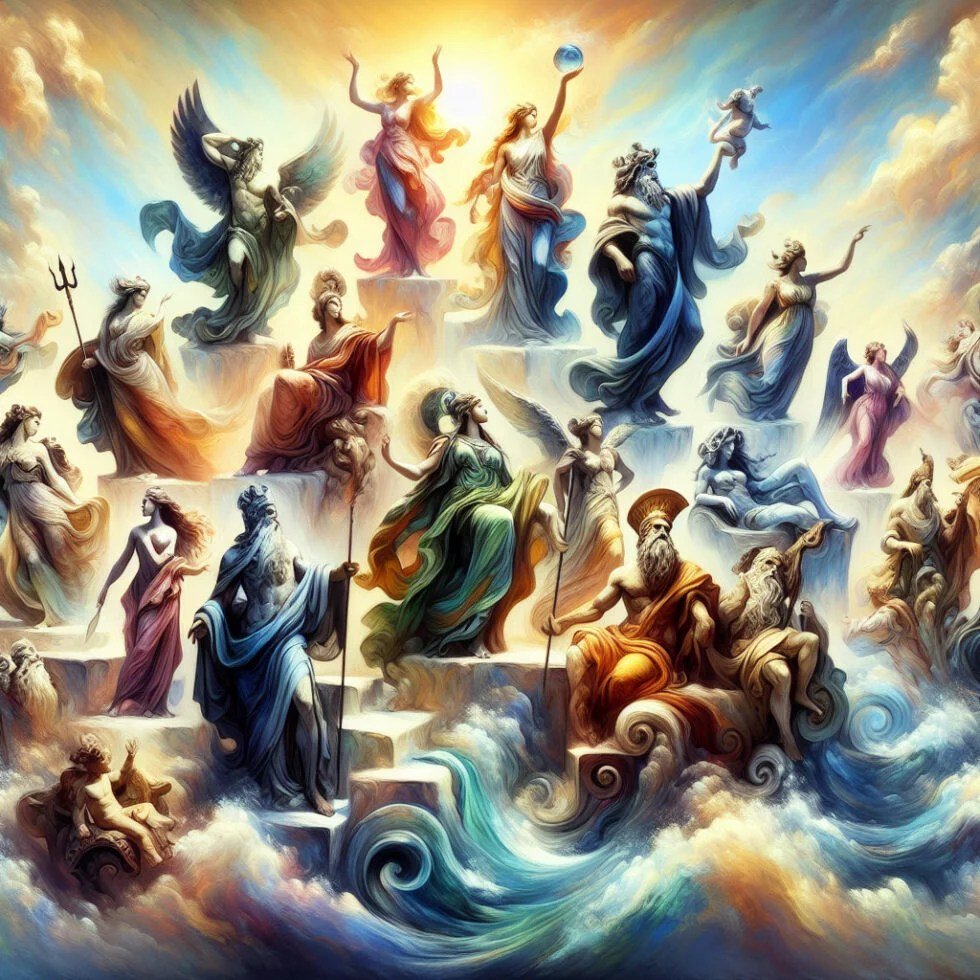
When ancient Rome encountered the vibrant tapestry of Greek culture, it didn't just borrow; it transformed. The story of the Dioses Griegos y Romanos isn't simply a tale of parallel pantheons, but a fascinating case study in cultural absorption, reinterpretation, and the enduring power of myth to shape a society's identity. Rome, with its pragmatic spirit and insatiable appetite for conquest, didn't just conquer territories; it assimilated beliefs, gods, and narratives, often refashioning them to fit its own unique worldview. This isn't just academic history; it's a window into how cultures interact, evolve, and leave their indelible marks on the world.
At a Glance: Greek and Roman Deities
- Borrow, Don't Copy: Rome absorbed Greek gods and myths, but always filtered them through its own cultural lens, emphasizing Roman values like order, military prowess, and civic duty.
- The Interpretatio Romana: This key concept explains how Romans identified their own existing deities with foreign gods based on shared functions, allowing for assimilation without losing identity.
- Olympus & Beyond: While many core gods had clear Greek and Roman equivalents (Zeus/Jupiter, Hera/Juno), Rome also embraced unique deities and incorporated gods from other conquered cultures.
- Myth as a Tool: Greek myths often explored philosophical and ethical dilemmas, while Roman myths frequently served political purposes, legitimizing rulers and reinforcing state ideology.
- Evolving Stories: These myths were living traditions, not fixed scriptures, meaning variations were common and the pantheon was fluid, adapting over centuries.
The Roman Genius for Adaptation: Where Gods Met Crossroads
Imagine a bustling ancient marketplace, but instead of goods, cultures are trading ideas, beliefs, and even deities. That's essentially what happened when the Roman Republic expanded its influence, especially into the Hellenic world. Unlike some cultures that might have resisted foreign gods, the Romans possessed an extraordinary openness to external influences. They were adept at taking what worked, what resonated, and what could bolster their burgeoning empire.
The most profound example of this cultural exchange is evident in the striking similarities between the Greek and Roman pantheons. This wasn't a sudden, wholesale adoption, but rather a gradual, centuries-long process of cultural osmosis. The Romans, practical and outcome-oriented, saw familiar patterns in the Greek gods and found ways to integrate them, often giving them new names and, crucially, new meanings that resonated with their own values. This powerful synthesis led to the familiar pairings we know today, revealing a rich tapestry of shared spiritual heritage.
The Art of Interpretatio Romana: Making Foreign Gods Roman
At the heart of Rome's unique approach to foreign deities was a concept known as the Interpretatio Romana. This wasn't about blindly copying; it was a sophisticated method of cultural translation. When Romans encountered a foreign god, they wouldn't necessarily adopt the name directly. Instead, they would identify their own pre-existing deities with the newly encountered gods based on shared attributes, functions, or domains.
Think of it like finding a counterpart. If a Greek god was revered as the ruler of the sky and wielder of thunderbolts, the Romans naturally identified him with their own supreme sky god, Jupiter, even if their original Jupiter had a slightly different backstory. This allowed them to absorb external beliefs without sacrificing their distinct cultural identity. In essence, they were saying, "Yes, we recognize this god, and this is how they fit into our understanding of the divine." This process wasn't limited to the Greeks; it was a cornerstone of Roman religious policy, extending to other cultures as well, and the fascinating process of Interpretatio Romana illustrates Rome's adaptability.
Some Greek names were adopted directly, like Apollo and Hercules (from Heracles), perhaps because their functions were so universally understood or because their myths were particularly compelling. But for many others, distinctly Latin names, sometimes with independent etymologies, were assigned. This nuanced approach meant that while the framework was often Greek, the underlying spirit and emphasis became distinctly Roman.
Mirror Images, Roman Soul: The Olympian Pantheon & Their Equivalents
When we talk about Dioses Griegos y Romanos, we often immediately think of the familiar pairings: Zeus and Jupiter, Hera and Juno, Poseidon and Neptune. These Olympian gods formed the core of both divine families, residing atop Mount Olympus (in Greece) or simply in the celestial realms (for Rome). While the names changed, their primary roles often remained remarkably similar, acting as powerful archetypes of natural forces, human emotions, and societal structures.
Let's explore the central figures of this intertwined pantheon:
| Greek God | Roman God | Domain & Key Attributes |
|---|---|---|
| Zeus | Júpiter | King of the gods, sky, thunder, justice |
| Hera | Juno | Queen of the gods, marriage, childbirth, women |
| Poseidón | Neptuno | Sea, earthquakes, horses |
| Deméter | Ceres | Agriculture, harvest, fertility |
| Atenea | Minerva | Wisdom, strategic warfare, crafts, patron of Athens |
| Apolo | Febo/Apolo | Sun, music, poetry, prophecy, healing, archery |
| Artemisa | Diana | Hunt, wilderness, moon, childbirth, protector of virgins |
| Ares | Marte | War (often chaotic & violent for Greeks, honorable for Romans) |
| Afrodita | Venus | Love, beauty, pleasure, procreation |
| Hefesto | Vulcano | Fire, blacksmiths, craftsmen, volcanoes |
| Hermes | Mercurio | Messenger of the gods, commerce, travelers, thieves |
| Dioniso | Baco | Wine, revelry, theater, ecstasy |
| Hades | Plutón/Dis Pater | Underworld, wealth (from precious metals) |
| Hestia | Vesta | Hearth, home, family |
| These core twelve (or sometimes fourteen, depending on inclusion of Hades and Hestia/Dionysus) represent the primary forces that governed the ancient world, from the celestial heights to the depths of the earth. Understanding these connections is foundational to grasping ancient mythology. To truly appreciate the rich narratives, you can Discover the Pantheon of Gods and their intricate relationships. |
Beyond Olympus: Expanding the Divine Roster
The divine world of the Dioses Griegos y Romanos wasn't limited to the well-known Olympians. Countless other deities, spirits, and personifications populated the landscape, each playing a specific role in daily life, magic, and the cosmic order.
Consider:
- Love's Arrow: The mischievous Eros in Greek lore, son of Aphrodite, found his Roman counterpart in Cupid, son of Venus, often depicted blindfolded and shooting arrows of desire.
- The Fates: The Greek Moirai, weavers of destiny, were reflected in the Roman Parcae, who similarly controlled the thread of life for mortals and gods alike.
- Fortune's Wheel: The unpredictable Greek goddess Tique, embodying luck and chance, became the immensely popular Fortuna in Rome, revered for her power to bestow good or ill fortune.
- The Underworld's Sorceress: Hécate, the Greek goddess of magic, witchcraft, crossroads, and ghosts, was equated with the Roman Trivia, who held similar dominion over the liminal and mysterious.
- Nature's Spirits: The wild, goat-legged Pan, god of shepherds and flocks in Greece, found his match in the Roman Faunus, a benevolent forest deity often associated with fertility and prophetic powers.
These figures, along with personifications like Nike/Victoria (victory), Iris/Arcus (rainbow messenger), and Tánatos/Mors (peaceful death), filled out the spiritual landscape, addressing almost every aspect of existence.
Influences From Far Beyond: A Truly Global Pantheon
Rome's religious openness wasn't confined to Greece. As the empire expanded, so did its spiritual horizons. From the sands of Egypt to the mystical groves of Celtic lands, Roman belief absorbed deities from conquered peoples, demonstrating a truly cosmopolitan approach to faith. This willingness to integrate foreign gods into their own system was a powerful tool for cultural cohesion and administration.
- Isis (Egyptian): The revered Egyptian goddess of motherhood, magic, and fertility, Isis became incredibly popular in Rome, especially among women, and her cult spread throughout the empire.
- Mithras (Persian): This enigmatic Persian deity, associated with light, truth, and contracts, gained a significant following, particularly among Roman soldiers, who built underground temples (Mithraea) for his worship.
- Epona (Celtic): A goddess of horses, donkeys, and mules, Epona was especially venerated by Roman cavalrymen and transporters, reflecting her importance in the practical lives of those who relied on beasts of burden.
- Cernunnos (Celtic): The "Horned God" of the Celts, associated with nature, animals, fertility, and prosperity, sometimes found his way into Roman provincial worship, particularly in Gaul and Britannia.
This expansive adoption shows that the Roman pantheon was a living, breathing entity, constantly evolving and integrating new facets, ultimately reflecting the vast and diverse empire it governed. If you want to delve into Roman mythology further, you'll uncover many more examples of this fascinating syncretism.
More Than Just Names: How Rome Transformed the Divine Narrative
While the surface-level similarities between Dioses Griegos y Romanos are undeniable, the deeper differences reveal Rome's unique cultural signature. It wasn't merely a translation; it was a reinterpretation, often reflecting the stark contrast between Greek philosophical inquiry and Roman pragmatism.
Emphasis on Roman Values: From Chaos to Order
Perhaps the most significant difference lay in the emphasis. The Romans reinterpreted the gods through the lens of their own militaristic, disciplined, and often stoic values.
- Ares vs. Marte: In Greece, Ares was often depicted as a bloodthirsty, chaotic god of war, frequently unpopular even among his fellow Olympians. In Rome, Marte (Mars) was transformed into a foundational deity, revered as the mythical father of Rome's founders, Romulus and Remus. He wasn't just about brutal conquest; he embodied disciplined warfare, protection of the state, and civic virtue. Marte was a god to be honored and appeased before battle, a protector of the Roman people, a symbol of their strength and endurance.
- Aphrodite vs. Venus: The Greek Aphrodite was primarily the goddess of sensual love, beauty, and desire. While Venus retained these aspects, she also gained immense political significance in Rome. She became the ancestral mother of the Gens Julia, the powerful family of Julius Caesar and Emperor Augustus. This link elevated Venus to a protector of the Roman state, a symbol of its origins and divine favor. Her role expanded from personal passion to imperial destiny.
Gods Born of Roman Earth: Deities Without Greek Counterparts
Despite their extensive adoption of Greek gods, the Romans also maintained several unique deities, reflecting aspects of their culture that had no direct Greek parallel. These gods underscore the distinct identity Rome preserved.
- Jano (Janus): The two-faced god of beginnings, gates, transitions, and endings. Janus presided over thresholds, literally and metaphorically. His temple gates were open in times of war and closed in times of peace – a rare occurrence in Roman history. There is no direct Greek equivalent for a god embodying such specific transitions.
- Lares and Penates: These were vital household gods, protective spirits of the home, family, and pantry. The Lares guarded the household and crossroads, while the Penates protected the household's provisions. Their worship was deeply personal and ingrained in Roman daily life, representing an intimate connection to the spiritual realm that differed from the grand, often distant Olympians.
Myth as Tool: From Philosophy to Statecraft
The purpose and function of mythology often diverged between the two cultures.
- Greek Mythology: For the Greeks, myths served as a rich source for philosophical exploration, dramatic tragedy, and ethical debate. They pondered human nature, divine justice, and the complexities of fate through the stories of their gods and heroes. They were tales for contemplation and entertainment, often presented in epic poems like Homer's or the plays of the great tragedians.
- Roman Mythology: While Romans appreciated the dramatic flair, they were more inclined to instrumentalize mythology for political and social ends. They used myths to legitimize emperors, attribute military victories to divine favor, and reinforce civic virtues. The founding myth of Aeneas, a Trojan prince divinely fated to establish Rome, served as a powerful national epic, intertwining divine destiny with Roman imperial aspirations.
The Power of the Pen: Literary Sources and Reinterpretation
How we know these myths also differs significantly.
- Greek Sources: Our understanding of Greek mythology comes primarily from ancient epic poetry (like Homer's Iliad and Odyssey), dramatic plays (Sophocles, Euripides), and lyric poetry. These were often rooted in long-standing oral traditions.
- Roman Sources: Roman mythology, as we know it, is largely documented in later, more self-conscious literary works that often explicitly re-elaborated Greek myths with a Roman sensibility. Ovid's Metamorphoses, for example, retells countless Greek myths but weaves them into a continuous narrative of transformation, showcasing a distinct literary and cultural agenda. Virgil's Aeneid is a deliberate creation of a Roman epic, echoing Homer but serving the Roman state's narrative. These were not just stories; they were often foundational texts crafted for a specific purpose.
Cosmic Lineage: Understanding the Divine Generations
The mythology of the Dioses Griegos y Romanos provides a compelling explanation for the very creation and structure of the cosmos. This isn't just a haphazard collection of stories; it's a coherent (though complex) narrative of divine succession and the establishment of order from primordial chaos.
The universal origin story unfolds in distinct generations:
- Caos (Chaos): In the beginning, there was only Chaos, an undifferentiated void or primordial soup from which everything else emerged. It was a state of unformed, shapeless existence.
- Dioses Primordiales (Primordial Gods): From Chaos sprang the first fundamental entities of the universe. Key among them were Gea (Gaea/Earth) and Urano (Uranus/Sky), along with Tartarus (the deep abyss) and Eros (primordial desire or procreation). These gods personified the fundamental elements of existence.
- Titanes (Titans): The offspring of Urano and Gea, the Titans were powerful, colossal beings who ruled the cosmos before the Olympians. Led by Cronos (Saturn in Roman myth), they represented a wilder, less refined order. Cronos famously overthrew his father, Urano, fearing a prophecy that his own children would usurp him.
- Dioses Olímpicos (Olympian Gods): Fulfilling the prophecy, Cronos's children – Zeus (Jupiter), Poseidón (Neptune), Hades (Pluto), Hera (Juno), Deméter (Ceres), and Hestia (Vesta) – rebelled. Led by Zeus, they waged a ten-year war known as the Titanomaquia, ultimately defeating the Titans and imprisoning most of them in Tartarus. The Olympians then established a new, more ordered cosmic regime from their seat on Mount Olympus, becoming the rulers of the world as we know it. These were the gods who most directly interacted with humanity and whose stories became the cornerstone of classical mythology. For a comprehensive look at the Olympian gods and goddesses, exploring their intricate family trees and dramatic rivalries is essential.
Of God-Born and Mortals: The Human Element in Myth
The stories of the Dioses Griegos y Romanos aren't solely about divine squabbles and cosmic battles. They are equally rich with the tales of humanity – its triumphs, tragedies, and the fascinating intersection where the mortal and immortal worlds collide.
Heroes and Demigods: Bridges Between Worlds
Perhaps the most compelling human figures are the heroes, individuals who possess extraordinary abilities, often thanks to divine parentage, and who perform incredible feats. Many are semidioses (demigods), born from the union of a god and a mortal, inheriting a mixture of divine power and human vulnerability.
- Heracles / Hércules: The quintessential hero, known for his immense strength and the Twelve Labors he performed as penance. In Rome, as Hercules, he became a symbol of strength, endurance, and masculine virtue, with several Roman cults dedicated to him. His strength and perseverance were highly valued.
- Aquiles (Achilles): The greatest warrior of the Trojan War, known for his near-invulnerability (except for his heel) and his fierce, often prideful, nature.
- Perseo (Perseus): The slayer of Medusa and rescuer of Andromeda, he embodied courage and divine favor.
- Odiseo / Ulises: The cunning king of Ithaca whose arduous ten-year journey home after the Trojan War (the Odyssey) became an epic tale of perseverance, wit, and hardship. While less central to early Roman identity than Greek, his story profoundly influenced Roman narrative, inspiring the character of Aeneas.
- Eneas (Aeneas): While Trojan, Aeneas is fundamentally a Roman hero. He is the son of Aphrodite/Venus and a mortal prince, tasked by the gods to lead his people from fallen Troy to Italy and found a new city – the mythological ancestor of Rome. His story, famously told in Virgil's Aeneid, established a divine pedigree for Rome and its imperial destiny, showcasing piety, duty, and resilience.
These heroes, whether purely Greek or assimilated by Rome, served as powerful models for behavior and values. They explored the boundaries of human potential and the consequences of divine intervention. Delving into the stories of famous mythological heroes reveals the enduring appeal of strength, cunning, and perseverance.
The Weight of Mortal Choices: Human Drama and Ethical Dilemmas
Beyond the gods and demigods, ordinary mortals also played pivotal roles, often becoming catalysts for great events or tragic figures exploring complex ethical dilemmas.
- Agamenón (Agamemnon): The king who led the Greek forces to Troy, his story is fraught with moral compromise, sacrifice (of his daughter Iphigenia), and tragic revenge.
- Helena de Esparta (Helen of Sparta): Her beauty, or her abduction, sparked the Trojan War, a testament to the power of human desire and its far-reaching consequences.
- Edipo (Oedipus): The tragic king who unknowingly killed his father and married his mother, his story delves into themes of fate, free will, and the devastating impact of ignorance.
These mortal tales, whether in Greek tragedy or Roman epic, provided a canvas for exploring the human condition, the interplay of fate and choice, and the often-grim consequences of hubris or flawed judgment.
Monsters and Marvels: The Bestiary of Ancient Lore
No discussion of Dioses Griegos y Romanos is complete without acknowledging the astounding array of creatures, beasts, and mythological beings that populated their world. From terrifying hybrids to enchanting sirens, these entities often served as formidable obstacles for heroes to overcome, symbolizing the wild, untamed forces that civilization sought to conquer. Their defeat often represented the triumph of order over chaos.
The Greco-Roman bestiary includes hundreds of creatures, many with complex divine genealogies:
- Medusa: One of the Gorgons, a monstrous woman with venomous snakes for hair, whose gaze could turn onlookers to stone. Slain by Perseus.
- Minotauro (Minotaur): A creature with the head of a bull and the body of a man, born from Queen Pasiphae and a divine bull. Imprisoned in the Labyrinth and ultimately killed by Theseus.
- Quimera (Chimera): A terrifying fire-breathing hybrid monster, usually depicted with the head of a lion, a goat's body, and a snake's tail. Slain by Bellerophon atop Pegasus.
- Cerbero (Cerberus): The multi-headed (often three-headed) dog that guarded the entrance to the Underworld, preventing the dead from leaving and the living from entering without permission. Subdued by Heracles as one of his labors.
- Sirenas (Sirens): Alluring creatures, often depicted as bird-women, whose enchanting songs lured sailors to their death on rocky shores. Odysseus famously resisted their call.
- Escila y Caribdis (Scylla and Charybdis): Two sea monsters dwelling on opposite sides of a narrow strait. Scylla was a multi-headed monster that snatched sailors from passing ships, while Charybdis was a whirlpool that swallowed ships whole. Navigating between them was a classic "between a rock and a hard place" dilemma.
These creatures, and countless others, were not just monsters; they were often manifestations of divine wrath, curses, or the chaotic forces that predated the Olympian order. Their stories added layers of danger, wonder, and moral challenge to the ancient myths.
The Living Narrative: Why Myths Were Never Static
It's crucial to remember that the mythology of the Dioses Griegos y Romanos was not like a sacred, fixed text such as a bible or a holy book. Instead, it was a dynamic, evolving oral tradition, fluid and adaptable, that developed over many centuries. This meant that there was no single, definitive version of any given myth.
Think of it like folk tales passed down through generations. Different poets, storytellers, and regions would recount the same core stories with significant variations, elaborations, and even contradictions.
- Regional Variations: A god might have slightly different attributes or a different favored cult in Athens than in Sparta, or in Rome versus a distant province.
- Poetic License: Poets like Homer, Hesiod, Ovid, and Virgil didn't just record myths; they often shaped them, adding their own creative interpretations, moral lessons, or political agendas.
- Evolving Understanding: As societies changed, so too did the understanding and portrayal of their gods. A deity's role might expand or contract, reflecting new societal needs or anxieties.
This inherent flexibility also explains why the exact "number" of gods is not definitive. Depending on who you asked, where they lived, and which aspect of a deity they emphasized, the pantheon could seem to expand or contract. Some minor deities might be localized, others might be aspects of a greater god, and new ones could be assimilated. This fluidity is one of the most fascinating aspects of studying exploring Greek mythology and its Roman counterpart, reminding us that cultural narratives are always in motion.
Decoding the Pantheon Today: What These Stories Still Offer
The tales of the Dioses Griegos y Romanos are far more than dusty relics from antiquity. They are powerful narratives that continue to resonate in our language, art, literature, and even our psychological frameworks. They offer profound insights into the human condition, timeless archetypes, and the intricate ways cultures interact and evolve.
By understanding how Rome adopted, adapted, and sometimes utterly transformed Greek beliefs, we gain a deeper appreciation for the nuanced process of cultural exchange. We see how a pragmatic empire could embrace foreign deities while imbuing them with a distinctly Roman spirit, using myth not just for entertainment or philosophical contemplation, but as a potent tool for national identity and political legitimization.
These stories remind us that:
- Culture is Dynamic: No culture exists in a vacuum. Interaction, borrowing, and reinterpretation are constant forces shaping identity.
- Myths Endure: The themes of love, war, ambition, sacrifice, and the search for meaning remain eternally relevant, offering reflections on our own lives and societies.
- Perspective Matters: The same god can represent different things to different people, depending on their values, history, and social context.
So, the next time you encounter a reference to Jupiter's thunder or Venus's beauty, remember that you're not just touching upon ancient history. You're engaging with a living legacy, a testament to humanity's enduring fascination with the divine, and the remarkable way one civilization made the gods of another truly their own. These stories continue to shape our understanding of the world, providing a rich, complex, and utterly human tapestry of belief.