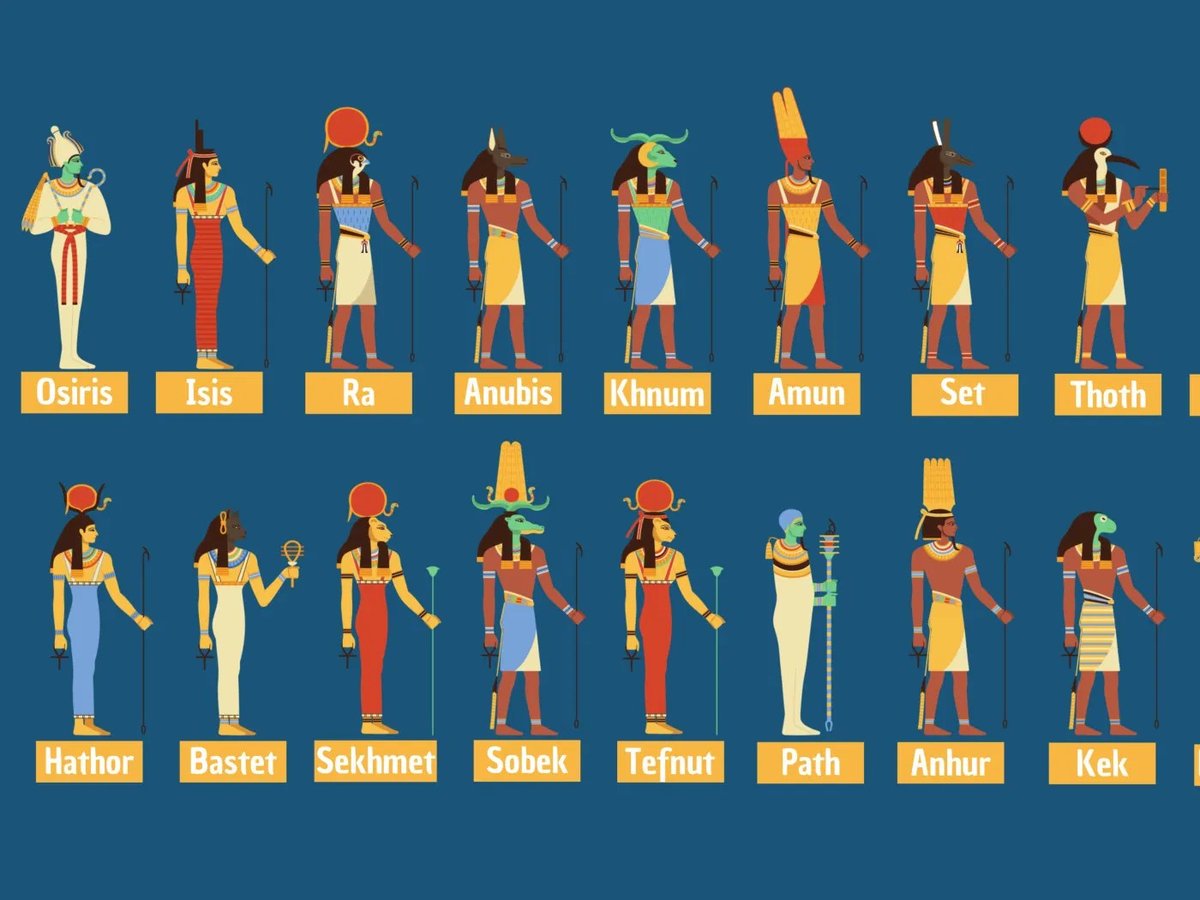
Imagine a civilization that worshipped not just a handful, but perhaps thousands of divine beings—a pantheon so rich and complex it sustained beliefs for over three millennia. That was Ancient Egypt, and its Dioses Egipcios were far more than just mythical figures; they were the very fabric of daily life, cosmology, and the afterlife, shaping every aspect of existence for its people. From the shimmering sun disk of Ra to the jackal-headed guide Anubis, these deities embodied the natural world, human emotions, and the profound mysteries of existence.
This comprehensive guide will lead you through the fascinating world of Ancient Egyptian gods, exploring their powers, myths, and lasting impact.
At a Glance: Diving into the Divine World of Ancient Egypt
- A Vast Pantheon: Ancient Egyptians revered an astonishing 1,500 to 2,000 distinct deities over roughly 3,000 years of civilization.
- Everyday Relevance: These gods weren't distant entities; they were integral to daily life, influencing rituals, morality, and the understanding of the universe.
- Nature Personified: Many deities were personifications of natural phenomena like the sun, the Nile, the sky, and even emotions or abstract concepts.
- Animal Connections: Gods frequently appeared with animal heads or full animal forms, symbolizing specific attributes or powers.
- Centrality of the Afterlife: Belief in the afterlife was paramount, with numerous gods playing crucial roles in the journey to the Duat (underworld) and the judgment of souls.
- Pharaohs as Divine: Rulers were considered living gods or intermediaries, often identified with Horus or as sons of Ra and Amun.
- Dynamic Beliefs: The pantheon was not static; gods merged, evolved, and their prominence shifted over centuries, reflecting societal and political changes.
The Cosmic Architects: Gods of Creation and Sustenance
At the heart of Egyptian mythology lay the fundamental drive to understand creation and the forces that sustained the world. Many gods were revered as the ultimate shapers of existence, bringing order from primeval chaos.
Ra: The All-Seeing Sun God
Ra (Re) stood as the paramount deity, the glorious god of the sun whose light illuminated and saw all. Often depicted as a man with a falcon's head crowned by a solar disk, or as a majestic falcon, Ra's power was universal. His worship was widespread, reflecting the sun's vital importance to life in Egypt. Pharaohs often identified themselves as "sons of Ra," cementing their divine authority directly through him. Each day, Ra sailed across the sky in his solar bark, battling the serpent Apep each night to ensure the sun's rebirth at dawn.
Amun: The Hidden King of the Gods
Initially a local deity of Thebes, Amun (Amón-Ra) rose to national prominence, becoming the "hidden one" and king of the gods, especially during the New Kingdom. He was often associated with Ra, forming the powerful syncretic deity Amun-Ra, representing both the life-giving power of the sun and the unseen force behind creation. Amun was typically depicted with a ram's head or as a man wearing a tall double-plumed crown. His cult reached its apex in Thebes, where the colossal Temple of Karnak stood as his primary sanctuary. Like Ra, Amun's connection to royalty was strong, with pharaohs proclaiming themselves "sons of Amun."
Ptah: The Artisan of Creation
In Memphis, Ptah was revered as the god of creation in a unique, intellectual sense. He was the patron of artisans, builders, sculptors, and architects, believed to have created the world through his thought and spoken word—a concept profoundly philosophical for its time. Ptah was usually depicted as a bearded man tightly wrapped in a tunic, wearing a skullcap and holding an ankh-shaped scepter. He brought the universe into being by conceiving it in his heart and commanding it into existence with his tongue.
Khnum: The Divine Potter
Known as "the one who models" or "the potter," Khnum was another creator god with a more hands-on approach. He was believed to have sculpted human beings on his potter's wheel, shaping their bodies and destinies from the rich clay of the Nile. Depicted with a ram's head or as a complete ram, Khnum symbolized fertility and regeneration, underscoring the vital connection between the Nile's silt and the creation of life itself.
Tefnut & Shu: The Primordial Pair
Tefnut, goddess of moisture, fertility, and life creation, was one of the first gods born from Ra, alongside her brother Shu, the god of air. Their names quite literally meant "moisture" and "air." This primordial pair was responsible for bringing structure and order to the nascent cosmos, separating the sky from the earth and contributing to the delicate balance of the world.
Geb & Nut: Earth and Sky Embraced
Born from Shu and Tefnut, Geb (the earth) and Nut (the sky) were inseparable lovers, constantly entwined until Ra ordered Shu to separate them, thus creating the space for existence. Geb, often depicted as a man reclining with vegetation sprouting from his body, symbolized life, fertility, agriculture, and abundance. Nut, the sky goddess, was often shown arched over Geb, her body covered in stars, swallowing the sun each evening and giving birth to it each morning. Geb also played a role in the judgment of souls, underscoring the earth's connection to the cycle of life and death.
Kek: The Embodiment of Primordial Darkness
Before creation, there was Kek (Kuk, Keku), the god of primordial darkness and the chaos it represented. Often depicted as a serpent or a frog, Kek was part of the Ogdoad of Hermopolis, a group of eight primeval deities representing the state of the world before creation, related to Nun, the cosmic ocean. He embodied the pre-existence of light, the very essence of the night and the absence of illumination.
Guardians of the Underworld: Life, Death, and Rebirth
Few pantheons explored the afterlife with as much depth and intricacy as the Egyptians. Their gods of the underworld dictated the fate of souls, offering promises of resurrection and eternal life.
Osiris: Ruler of the Afterlife
Osiris was arguably one of the most significant deities, embodying the cycle of life, death, and resurrection. He ruled the underworld, presiding over the judgment of souls, but was also deeply associated with fertility and the annual rebirth of the Nile's vegetation. His myth is one of betrayal and triumph: murdered and dismembered by his jealous brother Seth, he was miraculously reassembled and resurrected by his devoted wife Isis, becoming the first mummy. This foundational myth offered immense hope to Egyptians about their own prospects in the afterlife.
Isis: The Great Mother and Magician
Isis stood as a powerful and immensely popular goddess of motherhood, fertility, healing, and magic. She was the devoted wife and sister of Osiris and the protective mother of Horus. Her unwavering determination to resurrect Osiris and protect her son made her a symbol of fierce love and resilience. Isis’s magical prowess was unparalleled, allowing her to restore Osiris and conceive Horus, solidifying her status as a universal mother figure and a practitioner of powerful enchantments. Her cult extended far beyond Egypt, reaching across the Roman Empire.
Horus: Avenger, Protector, and Royal Deity
The son of Osiris and Isis, Horus was a multi-faceted god of the sky, light, and kingship. Often depicted as a man with a falcon's head or as a falcon, Horus played two primary roles: Horus the Younger, who avenged his father's murder and ultimately defeated Seth, and Horus the Elder, associated with the heavens and identified with the reigning pharaohs. The pharaoh was considered the living Horus, ensuring divine rule and cosmic order on Earth. His conflict with Seth was a central theme in Egyptian mythology, representing the triumph of order over chaos.
Anubis: The Jackal God of Mummification
With his distinctive jackal head, Anubis was the revered god of the dead and mummification, as well as the guardian of tombs and cemeteries. He oversaw the elaborate funeral rituals, preparing the deceased for their journey to the afterlife. A crucial moment in this journey was the "Weighing of the Heart" ceremony, where Anubis supervised the comparison of the deceased's heart against Maat's feather of truth. He ensured that the rituals were performed correctly, granting the deceased safe passage and a chance at eternal life.
Thoth: The Divine Scribe of Wisdom
Thoth, the god of wisdom, knowledge, writing, mathematics, and magic, was depicted with the head of an ibis or a baboon. He was the "scribe of the gods," meticulously recording divine events, judgments, and the secrets of the cosmos. As the patron of scribes and scholars, Thoth was instrumental in imparting knowledge to humanity. He was also closely associated with the moon, believed to regulate its cycles and therefore the flow of time itself.
Maat: The Embodiment of Cosmic Order
More than just a goddess, Maat was the very personification of truth, order, justice, harmony, morality, and cosmic ethics. Represented with an ostrich feather on her head, Maat was fundamental to the universe's proper functioning. Her feather was the standard against which the hearts of the deceased were weighed. The "Law of Maat" encompassed ethical principles like truthfulness, balance, and benevolence, guiding both human and divine conduct. Living in accordance with Maat was the ultimate goal for any Egyptian, ensuring a harmonious existence and a favorable judgment in the afterlife.
Forces of Nature and Human Emotions: Diverse Deities
Beyond creation and the afterlife, a vast array of gods embodied the powerful, often contradictory, aspects of nature and the full spectrum of human experience—from devastating chaos to serene love and nurturing protection.
Seth: God of Chaos and Storms
The formidable Seth (Set) was the god of chaos, storms, deserts, and desolation. Represented as a peculiar creature with a distinctive snout, long ears, and a stiff forked tail—a composite of various animals, symbolizing his chaotic nature—Seth was the principal antagonist of Horus. He embodied the untamed, destructive aspects of the world and the primal forces that challenged order. Despite his negative portrayal in the Osiris myth, Seth was also a powerful and sometimes protective god, especially in areas like the desert borders, demonstrating the complex nature of Egyptian deities.
Hathor: Goddess of Love and Joy
One of the most beloved goddesses, Hathor, embodied love, beauty, music, dance, happiness, pleasure, and motherhood. Often depicted as a woman with a cow's head or with a solar disk nestled between cow horns, she was associated with the sistrum, a musical instrument. Hathor was a gentle and nurturing deity, a protector of women, especially during childbirth, and she guided the deceased into the afterlife with grace and joy. She was revered as the mother of the king and a benevolent protector.
Bastet: The Feline Protector
Initially a fierce lioness goddess, Bastet evolved into the gentle feline goddess of fertility, motherhood, the home, and protection against evil spirits and disease. Her transformation reflected the domestication of cats in Egypt. Depicted as a woman with the head of a cat or as a full cat, Bastet symbolized kindness, harmony, and joy, fiercely defending families from dangers. Her cult center at Bubastis was famed for its annual festivals, celebrating music, dance, and revelry.
Sobek: Lord of the Waters
The formidable crocodile god Sobek was closely associated with the Nile River, its fertile banks, marshes, and the agricultural abundance they brought. Depicted as a man with a crocodile's head or as a complete crocodile, often adorned with a royal crown or an ankh, Sobek's power was dualistic. While crocodiles were feared for their danger, Sobek was also worshipped for his protective qualities, believed to ward off evil and ensure the Nile's life-giving floods. His cult was particularly strong in the Faiyum region of Upper Egypt.
Sekhmet: The Powerful Lioness
Sekhmet, the "Powerful One," was a fierce lioness goddess of war, brute strength, vengeance, and destruction. She was also paradoxically considered a protector of Egypt and a healer of diseases. Depicted as a lioness or a woman with a lioness head, Sekhmet was the daughter of Ra, sent by him to punish humanity. Her destructive rage was legendary, nearly wiping out mankind until Ra intervened by tricking her with red-dyed beer, which she mistook for blood, causing her to drink until she fell asleep.
Anhur: The Warrior God
Anhur (Onuris) was the god of war and hunting, renowned for his courage, intelligence, and strength. His name, meaning "he who leads back the distant one" or "the one who kills or carries the spear," reflects his martial nature. He was often depicted as a man wearing a crown of ostrich feathers or a lion's head, wielding a spear. Anhur was believed to have brought his Nubian wife, Mehit, back to Egypt, showcasing his protective and leadership qualities. He was occasionally associated with the Greek god Ares.
Khonsu: The Traveler of the Night Sky
Khonsu, the god of the moon, time, and healing, played a crucial role in Egyptian cosmology. His name, "traveler" or "navigator," referred to the moon's journey across the night sky. As the moon was vital for the Egyptian calendar, Khonsu was deeply connected to the measurement of time. He was frequently invoked in medical rituals due to his healing powers and was often depicted as a youthful man with a crescent moon and full moon disk on his head, sometimes holding a scepter, or as a falcon with a moon crown.
The Dynamics of Divinity: Syncretism and Evolution
The Egyptian pantheon was not a static entity. Over 3,000 years, deities evolved, merged, and adapted to changing theological and political landscapes. This process, known as syncretism, allowed for the seamless integration of different traditions and the creation of powerful composite deities.
A prime example is Amun-Ra, where the once localized Amun merged with the universal sun god Ra to create a supreme deity whose influence spanned the entirety of Egypt. This fusion reflected the growing power of Thebes and its desire to integrate its patron god into the wider solar theology. Similarly, deities might acquire new attributes, change their iconography, or even shift their primary cult centers, demonstrating the dynamic and adaptable nature of Egyptian religious belief.
For instance, the local crocodile god Sobek gained prominence in areas where the Nile's power was most evident, becoming a protector and fertility deity rather than merely a creature to be feared. This fluidity made the Egyptian religion incredibly resilient and adaptable, allowing it to incorporate new ideas and regional variations without fundamentally fracturing its core beliefs. The sheer number of gods, from major cosmic forces to minor household protectors, allowed for a personalized and comprehensive spiritual life.
Decoding the Symbols: Understanding Egyptian Deities
To truly appreciate the Dioses Egipcios, one must understand their visual language. The Egyptians were masters of symbolism, and every element of a god's depiction conveyed meaning:
- Animal Heads/Forms: The animal chosen for a deity was not arbitrary. The fierce nature of a lion (Sekhmet), the keen sight of a falcon (Horus), the cunning scavenging of a jackal (Anubis), or the creative power of a ram (Amun, Khnum) directly reflected the god's primary attributes.
- Crowns and Headdresses: These were specific identifiers. Ra's solar disk, Amun's double plumes, Hathor's cow horns, or the Atef crown of Osiris immediately communicated identity and divine rank.
- Scepters and Ankhs: Many gods carried the was-scepter, symbolizing power and dominion, or the ankh, the hieroglyphic symbol for "life," indicating their life-giving or life-sustaining powers.
- Colors and Materials: The color of a deity's skin or regalia could be significant. Green often symbolized regeneration (Osiris), while blue could denote the heavens or the primeval waters (Amun).
These visual cues allowed even the illiterate to recognize and understand the roles of their myriad gods, creating a shared religious landscape.
Living with the Divine: Gods in Daily Egyptian Life
The presence of the Dioses Egipcios permeated every aspect of ancient Egyptian society, from the grand rituals of the pharaoh to the humble prayers of a farmer.
- Temples as Earthly Homes: Majestic temples, like Karnak for Amun or Edfu for Horus, were considered the earthly dwellings of the gods. Only priests and the pharaoh could enter the innermost sanctuaries, where cult images were cared for through daily rituals of cleansing, dressing, and offering.
- Personal Piety: Ordinary Egyptians connected with deities through smaller shrines at home, amulets, and prayers. They might appeal to Hathor for love, Bastet for protection, or Khonsu for healing. Many carried small statues or protective symbols like the Eye of Horus.
- Festivals and Processions: Religious festivals were vibrant public events where the cult images of gods were carried in grand processions, allowing the populace to witness and participate in the divine presence, reinforcing community bonds and religious devotion.
- Moral Code: The principles of Maat, emphasizing truth, justice, and cosmic order, guided ethical behavior in society. Adherence to Maat was believed to ensure a harmonious life and a successful passage into the afterlife.
- The Nile's Divinity: The annual inundation of the Nile, crucial for agriculture, was seen as a divine gift, often associated with Osiris's rejuvenating power and Sobek's control over the waters.
For the ancient Egyptians, the divine was not separate from the mundane; it was intimately intertwined, shaping their worldview, their actions, and their hopes for eternity. If you wish to Explore the world of gods, understanding these foundational connections is key.
Beyond the Major Players: The Vast Egyptian Pantheon
While we've highlighted some of the most prominent Dioses Egipcios, it's crucial to remember the sheer scale of the Egyptian pantheon. The number 1,500 to 2,000 distinct deities includes local gods, minor spirits, deified concepts, and even deified pharaohs. Many of these deities were regional, specific to a particular town or nome (province), their influence rarely extending throughout the entire land.
For example, there were numerous serpent gods and goddesses, each with a specific name and protective role. There were deities of specific crops, guardian spirits of households, and even personifications of abstract qualities like "Taste" or "Hearing." This rich tapestry of divine beings provided an almost endless source of spiritual comfort and explanation for every conceivable aspect of existence.
Common Questions About Egyptian Gods
Navigating the complexities of Ancient Egyptian religion can bring up many questions. Here are answers to some common ones:
Were the Egyptian gods good or evil?
Unlike many Western religions, Egyptian deities weren't strictly categorized as "good" or "evil." Most gods possessed both benevolent and destructive aspects, mirroring the unpredictable nature of the world. Seth, for instance, was chaotic and murderous but also a powerful protector against foreign enemies. Sekhmet brought plagues but also healing. Their actions served cosmic balance, even if they seemed destructive to humans.
Did Egyptians worship animals?
Egyptians didn't worship animals themselves but revered them as living manifestations or sacred symbols of specific deities. A particular bull might be considered a living embodiment of Apis, a cat a symbol of Bastet, or a crocodile for Sobek. Harming these sacred animals could incur divine wrath, not because the animal was divine, but because it represented a god.
How did their beliefs change over time?
Egyptian religion was remarkably fluid. Over 3,000 years, gods' prominence shifted, new deities emerged, and existing ones merged (syncretism). For example, Ra’s importance waned and waxed, and Amun rose to immense power. Monotheistic experiments, like Akhenaten’s worship of the Aten (the sun disk), were short-lived but show the dynamic nature of their beliefs.
What happened to the Egyptian gods?
The worship of Egyptian gods gradually declined with the rise of Christianity and Islam. By the 4th to 6th centuries CE, the ancient temples were closed, and the practice of the traditional religion ceased. However, their stories, symbols, and artistic representations have survived through archaeological discoveries, continuing to fascinate and influence cultures worldwide.
Embracing the Legacy: Exploring Ancient Egypt's Divine World
The Dioses Egipcios offer us a profound window into one of history's most enduring and fascinating civilizations. Their stories are not just ancient myths; they are narratives woven with deep insights into human nature, the cosmos, and the eternal quest for meaning. From the dramatic tales of Osiris, Isis, and Horus to the cosmic dance of Ra and Amun, these deities provided structure, comfort, and a moral compass for millions across millennia.
By exploring their roles, symbols, and the myths that defined them, we gain a richer understanding of how ancient Egyptians perceived their world, navigated their lives, and prepared for their journey into eternity. Their legacy continues to captivate, inspiring artists, writers, and scholars, proving that even after thousands of years, the divine world of Ancient Egypt remains vibrantly alive in our collective imagination.