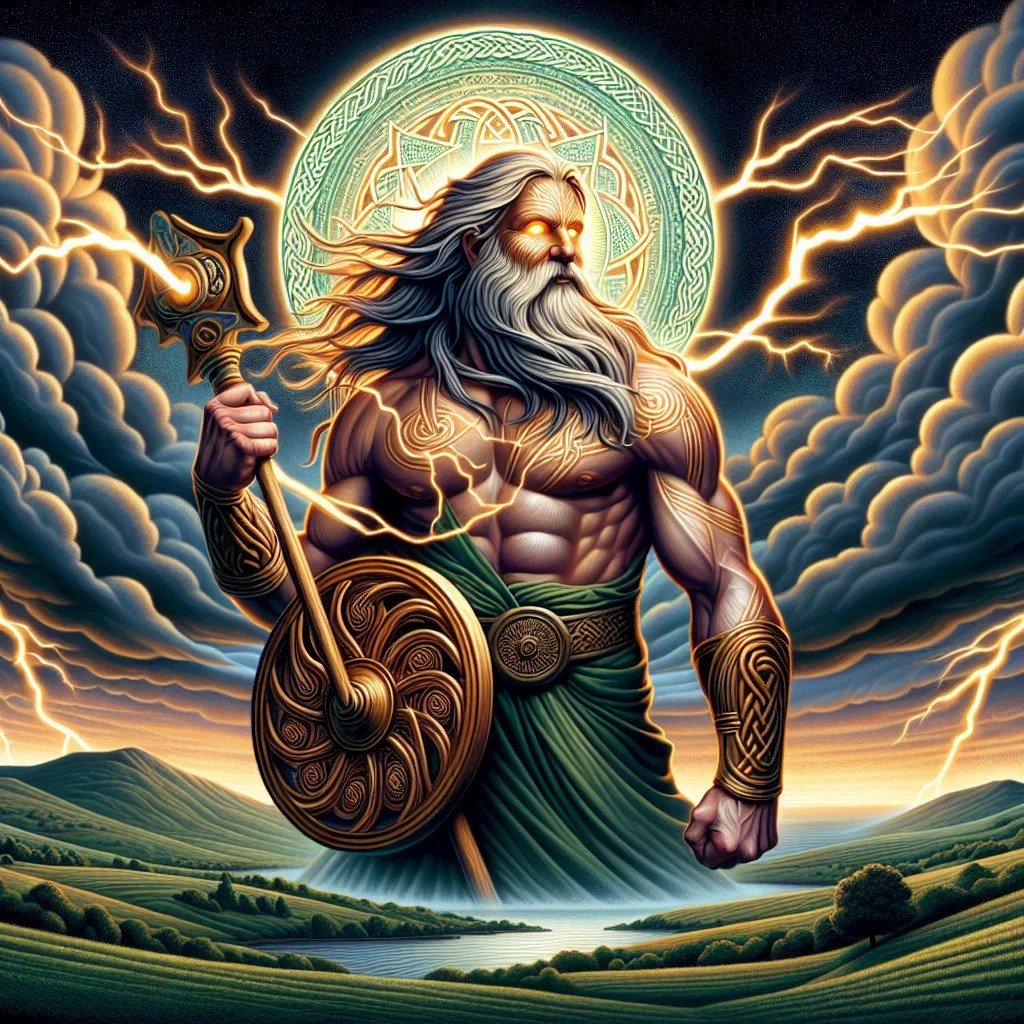
In the misty annals of Europe's Iron Age, before the Roman Empire cast its long shadow, a vibrant tapestry of beliefs thrived across what is now Ireland, Britain, Gaul, and even parts of the Iberian Peninsula. This was the world of the Celts, and at its heart lay a rich, complex pantheon of powerful and mysterious figures: the Dioses Celtas, or Celtic Gods. Far from a monolithic religion, Celtic mythology was a diverse, deeply nature-connected tradition that mirrored the dynamic, often fractured, lives of the tribes who worshipped them. These weren't distant, abstract deities; they were intertwined with the land, the seasons, war, and the very essence of human existence, shaping culture and belief in ways that still echo today.
At a Glance: Key Takeaways on Celtic Gods
- Diverse Pantheon: Unlike unified religions, Celtic beliefs varied geographically, leading to hundreds of localized deities, though some major gods were widely recognized.
- Nature-Centric: Celtic gods and goddesses were deeply connected to natural phenomena, agricultural cycles, and the wild environment.
- Polytheistic Structure: Multiple gods and goddesses governed different aspects of life, war, and the cosmos.
- Druidic Guidance: Priests and wise figures known as Druids played a crucial role in rituals, ceremonies, and maintaining the spiritual balance.
- Three-Part Cosmos: The Celtic universe was often envisioned as three interconnected realms: the land of absolute happiness, the human world, and the underworld.
- Enduring Legacy: Celtic mythology continues to inspire art, literature, and modern spirituality, leaving an indelible mark on European culture.
Unpacking the Mystical World of Celtic Mythology
The mythology of the Celts is not a single, cohesive doctrine but rather a mosaic of regional traditions, reflecting a people united by language and cultural threads, yet diverse in their specific practices. Spanning a vast geographical area and centuries of history, from the Iron Age through to the High Middle Ages in Ireland, their stories were primarily preserved through oral tradition by bards and druids, only later committed to writing by monastic scribes—often with Christian interpretations layered on top.
At its core, Celtic religion was profoundly polytheistic, characterized by a deep reverence for the natural world and the cyclical nature of life, death, and rebirth. You'll find echoes of this connection everywhere, from sacred groves and wells to the very functions ascribed to their deities. While scholars estimate there might have been up to 300 different deities across various Celtic tribes, a select few rose to prominence, recognized and revered in different forms from the shores of Ireland to the Iberian Peninsula. These ancestral gods, as they were sometimes called, embodied the forces of nature, human endeavors, and the very fabric of the cosmos.
The Pillars of the Pantheon: Major Celtic Deities
When you delve into the heart of Celtic mythology, certain figures invariably stand out. These are the gods and goddesses whose stories, attributes, and influence resonate most strongly through the surviving texts and archaeological evidence. They often embody complex roles, reflecting a worldview where power, wisdom, and natural forces were inextricably linked.
Dagda: The Good God and Father of All
If there's a figure who personifies the sheer vitality and abundance of the Celtic world, it's Dagda, often considered the supreme god of the Irish Celts. His name, "The Good God," hints at his benevolence and multifaceted abilities, though his portrayal is anything but prim. Dagda is depicted as a robust, sometimes gluttonous and sexually potent figure, carrying powerful symbols of his divine authority:
- The Club (Lorg Mór): A massive club so potent it could kill nine men with one end and restore them to life with the other. This duality symbolizes his power over life and death, creation and destruction.
- The Cauldron of Plenty (Coire Ansic): An inexhaustible cauldron that could feed any number of people, ensuring sustenance and hospitality. It represents abundance, fertility, and the endless cycles of nature.
- The Harp (Uaithne): A magical harp that could control the seasons and the emotions of men, capable of playing music that induced laughter, tears, or sleep. It embodies the power of art, order, and cosmic harmony.
Dagda is also famously the father of Brigid, linking him to healing, poetry, and craftsmanship. His stories often highlight his immense strength, earthy wisdom, and sometimes his comedic side, making him a deeply human and relatable divine figure.
Brigid: Goddess of Flame, Forge, and Inspiration
The daughter of Dagda, Brigid (or Bríg) is one of the most beloved and enduring figures in the Celtic pantheon, so much so that her worship persisted into the Christian era, transforming her into Saint Brigid of Kildare. Her domains are vast and interconnected, reflecting the essential aspects of civilization and well-being:
- Fire and the Hearth: As a goddess of fire, she represents the hearth's warmth, protection, and the transformative power of flames. She is often associated with perpetual sacred fires.
- Poetry and Inspiration: Brigid is a muse, inspiring bards and poets, and fostering creativity and eloquence.
- Healing and Medicine: She is revered for her healing abilities, particularly in connection with sacred wells and herbal lore.
- Craftsmanship: As a patron of smiths and artisans, she embodies skill, innovation, and the creative spirit.
- Fertility and Spring: Her connection to the Oimelc (Imbolc) festival marks the onset of spring, symbolizing new growth, purification, and the fertility of the land.
Brigid's multifaceted nature made her a central figure for countless generations, embodying the spark of life, knowledge, and healing that sustained Celtic communities.
Lugh: The Master of All Arts
Few Celtic deities are as widely recognized and revered across different tribes as Lugh (pronounced "Loo"). A supremely versatile god, his epithet, Samildánach ("master of all arts"), perfectly encapsulates his myriad talents. Lugh is often portrayed as a handsome, youthful warrior, embodying a blend of skill, sun-like radiance, and martial prowess:
- Sun God: Though not exclusively a sun deity, he is strongly associated with light, warmth, and the life-giving energy of the sun. The festival of Lughnasadh (Lá Lúnasa), celebrated in late summer, marks the harvest and is named in his honor.
- Craftsmanship and Skill: Lugh is a patron of virtually every craft and art—smithing, carpentry, poetry, sorcery, healing, and more. He represents excellence in human endeavor.
- Warrior and Strategist: He is a formidable warrior, often depicted with a magical spear and shield, leading the Tuatha Dé Danann in battle against the Fomoré. His strategic mind is as potent as his physical strength.
- Justice and Kingship: Lugh's leadership and ability to master many skills made him an ideal king, representing just rule and prosperity.
Lugh’s widespread veneration across Gaul, Britain, and Ireland highlights his universal appeal as a god of light, skill, and protective power.
Morrigan: The Shapeshifting Queen of Battle
For a stark contrast to the benevolent deities, you encounter Morrigan (or Mórrígan), a goddess whose very name evokes the chilling realities of war and fate. Often appearing as a trio of sisters (Badb, Macha, and Nemain), the Morrigan is a formidable and terrifying presence on the battlefield:
- Goddess of War, Fate, and Death: She doesn't just incite battles; she influences their outcome, often appearing as a raven or crow flying over the fray, symbolizing impending death and destruction.
- Shapeshifter: Her ability to transform into various animals, particularly corvids (crows, ravens), underscores her supernatural power and connection to the otherworld.
- Prophecy and Sovereignty: The Morrigan also possesses prophetic abilities, foretelling doom or victory. She can be linked to the concept of sovereignty, choosing and empowering kings through tests of valor.
- Duality of Life and Death: While fearsome, her role in the cycle of life and death is crucial. She represents the ultimate, unyielding forces that govern existence.
The Morrigan's presence reminds us that Celtic mythology embraced the darker, more visceral aspects of human experience, particularly the brutal realities of ancient warfare.
Taranis: The Thundering Sky God
From the thunderous skies descends Taranis, a god whose name literally means "Thunderer." Predominantly worshipped in Gaul, Britain, and parts of Ireland, he embodies the raw power of nature and the celestial realm:
- God of Thunder, Light, and Sky: Taranis wields the power of storms, lightning, and the heavens, making him a formidable and respected deity.
- The Cosmic Wheel: He is often associated with the "Cosmic Wheel," a symbol found on various archaeological artifacts, representing the turning of the seasons, the movement of the sun, and the cyclical nature of time and the universe.
- Warrior and Wise One: Like many sky gods, Taranis is often depicted as a warrior, protecting his people with the force of the heavens. He also holds wisdom, connecting the physical world with the divine.
- Significance in Hispania: His worship extended to the north of Hispania, indicating a broad reach for this powerful sky deity.
Taranis speaks to the Celts' deep connection to the elements and their understanding of the sky as a powerful, sometimes volatile, domain of the gods. As you explore the world of gods, you'll find that sky deities often hold positions of immense authority across many ancient cultures.
Beyond the Apex: Other Noteworthy Deities and Creatures
While Dagda, Brigid, Lugh, Morrigan, and Taranis are central, the Celtic pantheon was rich with numerous other significant figures who filled specialized roles, often reflecting local importance or specific cultural values.
Cernunnos: The Horned God of Wildness
Cernunnos, the "Horned One," is an enigmatic and ancient deity, frequently depicted with antlers (often of a stag), sometimes with torcs (Celtic neck rings) around his neck or horns, and accompanied by animals, particularly snakes. He is primarily associated with:
- Nature and Fertility: He represents the wildness of nature, forests, animals, and male fertility.
- The Underworld and Wealth: Some interpretations link him to the underworld and chthonic forces, and as a bringer of material wealth and prosperity.
- Liminality: His imagery suggests a connection between the human and animal worlds, and perhaps even the living and the dead.
Cernunnos's powerful and mysterious presence speaks to the Celts' deep respect for the untamed aspects of the natural world.
Epona: The Goddess of Horses
Unique among Celtic deities for her almost exclusive focus, Epona is the goddess of horses, ponies, donkeys, and mules. Her worship was particularly strong among the Gauls and Britons, and even adopted by Roman cavalry units:
- Horses and Riders: She protects horses, their riders, and all associated with equine activities, including fertility, stable management, and journeying.
- Travel and Sovereignty: As horses were vital for travel, trade, and warfare, Epona also had broader implications for safe passage and perhaps even the sovereignty of the land.
Epona's veneration highlights the critical role of horses in Celtic society, both practical and symbolic.
Mythical Creatures: From Leprechauns to Bardach
Celtic mythology isn't just about gods; it's teeming with a vibrant host of mythical creatures that inhabit the landscape, embodying both wonder and dread.
- Leprechauns: These small, shoemaking fae creatures are perhaps the most famous. Often depicted as solitary, mischievous, and wealthy, they guard pots of gold at the end of rainbows. They are figures of folklore, distinct from the major deities, yet deeply embedded in the popular imagination of Irish culture.
- Bardach: Less known but equally intriguing are figures like the Bardach, a legendary vampiric creature found in some Celtic traditions, reflecting the universal human fascination and fear of the undead.
These creatures, along with a multitude of fairies, sprites, and monstrous beasts, populate the rich tapestry of Celtic storytelling, providing moral lessons, explanations for natural phenomena, and a touch of magic to everyday life.
The Celtic Cosmos: A Journey Through Three Worlds
The Celtic understanding of the universe was profoundly structured, imagining existence not as a linear progression but as a layered, interconnected system. This cosmology often envisioned the universe as three distinct, superimposed disks, each with its unique characteristics:
- The Upper Disk: Tír na nÓg (The Land of Youth) or the Land of Absolute Happiness. This celestial realm was a paradise, a timeless place untouched by disease, old age, pain, or sorrow. It was the abode of the gods and heroes, a utopia that earthly mortals might sometimes glimpse or even visit under extraordinary circumstances. It represented the ideal, the divine, and the ultimate reward.
- The Middle Disk: The Human World. This is our world, the realm of mortals. It is a place of temporary existence, where humans live out their lives, experience joy and suffering, and navigate the challenges of the natural world. This disk is the stage for human drama and the interactions between mortals and the divine.
- The Lower Disk: The Underworld. Far from being a place of eternal damnation like some later Christian concepts, the Celtic underworld was a realm of darkness and death, but also one of rebirth and profound spiritual significance. It was where souls journeyed after death, and it often held ancient wisdom, magical artifacts, and powerful chthonic deities. It was a place of transformation, not merely punishment, essential to the cyclical worldview of the Celts.
This three-tiered cosmology underscores the Celtic belief in an interconnected reality, where the divine, human, and chthonic realms constantly influenced one another, shaping destiny and offering a holistic view of existence.
Ritual and Reverence: The Sacred Practices of the Celts
The religion of the Celts was not just a set of beliefs; it was fundamentally ritualistic. Life was lived in deep communion with the divine, and rituals were the bridge between the human and spiritual worlds, intended to secure the favor of the gods, maintain cosmic balance, and ensure prosperity.
The Integral Role of Druids
Central to all religious practices were the Druids. These were more than just priests; they were the intellectual and spiritual elite of Celtic society—philosophers, judges, teachers, healers, and seers. They memorized vast amounts of sacred knowledge, poetry, and laws, none of which were permitted to be written down. Their functions included:
- Performing Rituals: Druids conducted elaborate ceremonies in sacred groves, at megalithic sites, or by holy wells, acting as intermediaries between humans and the gods.
- Divination and Prophecy: They interpreted omens, read the future, and offered guidance based on their understanding of the spiritual world.
- Education: They trained new generations in history, law, astronomy, and theology.
- Justice: Druids often served as arbiters in disputes, their judgments holding immense authority.
Their influence was immense, signifying the profound importance of spiritual guidance in Celtic life.
Sacrifices, Offerings, and Ceremonies
Celtic rituals often involved various forms of sacrifices and offerings, not out of fear, but as a reciprocal act of gratitude and a means to maintain harmony with the divine. These could range from:
- Votive Offerings: Precious objects, weapons, or valuable goods submerged in lakes, rivers, or bog lands as gifts to the gods.
- Animal Sacrifices: Livestock might be offered to ensure fertility of the land or success in battle.
- Symbolic Gestures: Prayers, chants, and specific movements were crucial in ceremonies aimed at invoking divine blessings for good harvests, protection, or longevity.
These practices were not haphazard; they were carefully orchestrated by the Druids to align human actions with cosmic forces, ensuring the well-being of the community and the continuity of the universe.
Sacred Festivals: Marking the Cycles of Life
The Celtic calendar was punctuated by four major fire festivals, deeply tied to the agricultural and natural cycles, representing crucial turning points in the year:
- Samhain (October 31 - November 1): Perhaps the most significant, Samhain marked the end of summer and the harvest, and the beginning of the dark half of the year. It was believed to be a time when the veil between the human world and the Otherworld thinned, allowing spirits and deities to cross over. It was a time for remembering ancestors and preparing for winter. (Modern Halloween draws many of its traditions from Samhain).
- Imbolc (February 1): Associated with the goddess Brigid, Imbolc celebrated the first stirrings of spring, the promise of new life, and the lactation of ewes. It was a festival of purification and hope for renewed fertility.
- Beltane (May 1): Marking the beginning of summer, Beltane was a joyful festival of fertility, warmth, and light. Bonfires were lit to purify and protect livestock and people.
- Lughnasadh (August 1): Named after the god Lugh, this festival celebrated the first harvest of the year, a time of thanksgiving for abundance and skill, often involving athletic contests and feasting.
These festivals were not merely celebrations; they were vital religious observances that reinforced the Celts' profound connection to nature and their reliance on the blessings of their gods.
Clash of the Titans: The Tuatha Dé Danann vs. Fomoré
In the High Middle Ages of Ireland, a grand mythic cycle emerged, chronicling a monumental conflict that predated human habitation: a cosmic war between two divine races. This saga, most famously recounted in "Cath Maige Tuireadh" (The Battle of Mag Tuireadh), forms a cornerstone of Irish mythology.
The Tuatha Dé Danann: The Shining Ones
The Tuatha Dé Danann ("Tribes of the goddess Dana") are the revered main group of gods in the Irish pantheon. They are depicted as a race of divine beings of immense beauty, skill, and power, who arrived in Ireland bearing four magical treasures: the Lia Fáil (Stone of Destiny), the Sword of Light of Nuada, the Spear of Lugh, and the Dagda's Cauldron.
They represent the idealized aspects of human society:
- Royalty and Leadership: Led by figures like Nuada (who lost his hand in battle) and later Lugh, they embody just and wise governance.
- Arts and Craftsmanship: As seen with Lugh, they are masters of all skills—poetry, smithing, healing, and magic.
- Warfare and Protection: They are formidable warriors, fighting to establish order and defend their territory.
After their battles, the Tuatha Dé Danann eventually retreated into the sidhe (fairy mounds), becoming the Aos Sí, the fairy folk of Irish folklore.
The Fomoré: Gods of Chaos and Darkness
Opposing the Tuatha Dé Danann were the Fomoré (Fomorians), a primordial, often monstrous race associated with death, darkness, and the occult. They represent the untamed, chaotic forces of nature that predate civilization. They are often depicted as grotesque, one-eyed, or one-armed beings, embodying wildness and destructive power.
Their conflict with the Tuatha Dé Danann symbolizes a fundamental duality:
- Order vs. Chaos: The Tuatha D�� Danann embody the forces of civilization, art, and ordered society, while the Fomoré represent primeval chaos, the untamed wilderness, and destructive impulses.
- Light vs. Darkness: This struggle can also be seen as a metaphor for the triumph of light over darkness, or the establishment of human order over raw, primal forces.
The war between these two divine races is a foundational narrative, explaining the origins of the gods and the landscape, and illustrating the eternal struggle between opposing forces in the Celtic worldview.
Echoes in the West: Welsh Mythology and Enduring Legends
While much of our understanding of Celtic gods comes from Irish sources, other regions, particularly Wales, offer invaluable insights into pre-Christian Celtic beliefs. Welsh mythology, preserved in texts like the Mabinogion, reflects the traditions of the ancient Celtic peoples who settled there. Though often presented with a strong legendary and heroic slant, these stories contain remnants of older deities and mythic cycles, enriching our understanding of the broader Celtic tradition.
The rich tapestry of Celtic mythology, with its pantheon of powerful gods and goddesses, fierce warriors, wise druids, and fantastical creatures, has left an indelible mark on Western culture. From the monsters that populate popular fantasy literature to the enduring legends woven into the fabric of European folklore, the stories of the Dioses Celtas continue to captivate and inspire.
The Undying Legacy of Celtic Beliefs
The profound connection the Celts felt with nature and the cycles of life is perhaps the most enduring aspect of their spiritual heritage. This reverence is reflected not only in their myths and rituals but also in the lasting impact on art, literature, and even modern spiritual movements.
Today, you can see the influence of Celtic mythology in countless ways:
- Literature and Fantasy: From J.R.R. Tolkien's Middle-earth to modern fantasy novels and video games, Celtic themes of magic, ancient forests, heroic quests, and mystical creatures are perennially popular.
- Art and Symbolism: Celtic knots, spirals, and intricate designs, often imbued with spiritual meaning, continue to be celebrated in art, jewelry, and tattoos.
- Folklore and Traditions: Many European folk tales and customs, especially in Ireland, Scotland, Wales, and Brittany, still carry echoes of ancient Celtic beliefs, even if their pagan origins are largely forgotten. Festivals like Halloween directly stem from Samhain, linking us directly to these ancient practices.
- Modern Spirituality: Neo-pagan and Wiccan traditions often draw inspiration from Celtic polytheism, reinterpreting and honoring deities like Brigid and Cernunnos.
Understanding the Dioses Celtas offers more than just a glimpse into ancient religions; it provides a window into a worldview where the divine permeated every aspect of existence, where nature was sacred, and where the boundary between the mundane and the magical was beautifully blurred. Their stories remind us of the enduring human quest to understand our place in the cosmos, to honor the forces that sustain us, and to find meaning in the cycles of life and death that bind us all.